
Pokémon, the largest media franchise on the planet, developed by Game Freak, is all about battling, trading, and breeding your own monsters to either fight by your side or defend you. The games have a long history of making sure that each creature in the game has some cool facts about it when you first catch it. These Pokédex entries can often be insightful, humorous, or down right horrifying, but there is another category that we don’t normally talk about. Some of the entries for specific Pokémon refer to their decline as a species, near extinction, or recovery after hardship. Pokémon has been slipping in messages about conservation efforts for real animals through the monsters in their games for years.
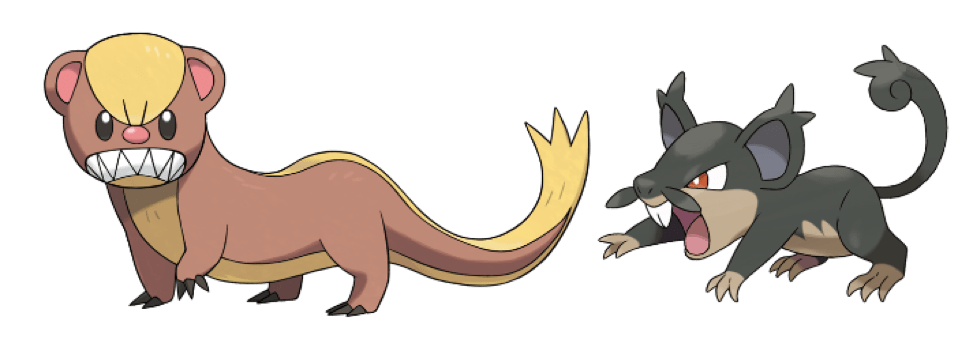
Most of these ecologically minded entries started in Pokémon Sun and Moon, a very fitting place given that Hawaii is a biodiversity hotspot that is constantly under threat from invasive species. The Pokémon Yungoos (pictured left) and Alolan Rattata (pictured right) are two such monsters that are causing quite a bit of trouble in this region. Yungoos is said to have been imported from another region and “It wanders around in a never-ending search for food”. Alolan Rattata’s Pokémon Ultra Moon entry states that “Night after night, they sneak into people’s homes seeking food. A massive outbreak of them has become an issue of public concern”. These two Pokémon are a direct reference to an ecological mistake which began in the late 1800s. To control the out-of-control rat population that entered the islands through ships docking at port, plantation owners decided that the only way to stop an invader was with another invader. The mongoose was selected as the perfect rat killer and released onto the islands as well. This backfired catastrophically due to the rats being nocturnal and the mongoose being diurnal, up during the day and sleeping at night. The two animals never interacted and instead of one invasive species destroying crops and native wildlife, the islands now had two. Pokémon decided to make a direct reference to this, even going so far as to have Yungoos only come out during the day and Rattata only coming out at night in game. It’s a clever reference that goes unnoticed by many.
These games didn’t stop with telling stories of past mistakes. The writers at Game Freak took a bit of time to course correct on one of their most infamous Pokémon, Sharpedo. Since the very beginning of its introduction in the 3rd generation (2002) Sharpedo (right) is often referred to as the “Bully of the Sea”. Its mean, cruel, and even chases the player in-game in Pokémon Sword and Shield whenever it sees them. This could have been just another piece of media using sharks as a “bad guy” and it would be nothing new, but one entry did attempt to give players a chance to learn about a very real issue happening to the sharks in our oceans today. Pokémon Moon’s entry states, “It has a sad history. In the past, its dorsal fin was a treasured foodstuff, so this Pokémon became a victim of overfishing”. Today, roughly 70 million sharks are harvested every year as part of the shark finning trade, where shark fins are used in the luxury food known as Shark Fin Soup. It’s a practice that has decimated shark populations around the world and a game designed for 10 year olds decided to let you know about it in its own subtle way. It should be noted that Game Freak decided to keep calling it the “Bully of the Sea” in the next games, but at least one section of writers tried to gloss up this Pokémon’s image.

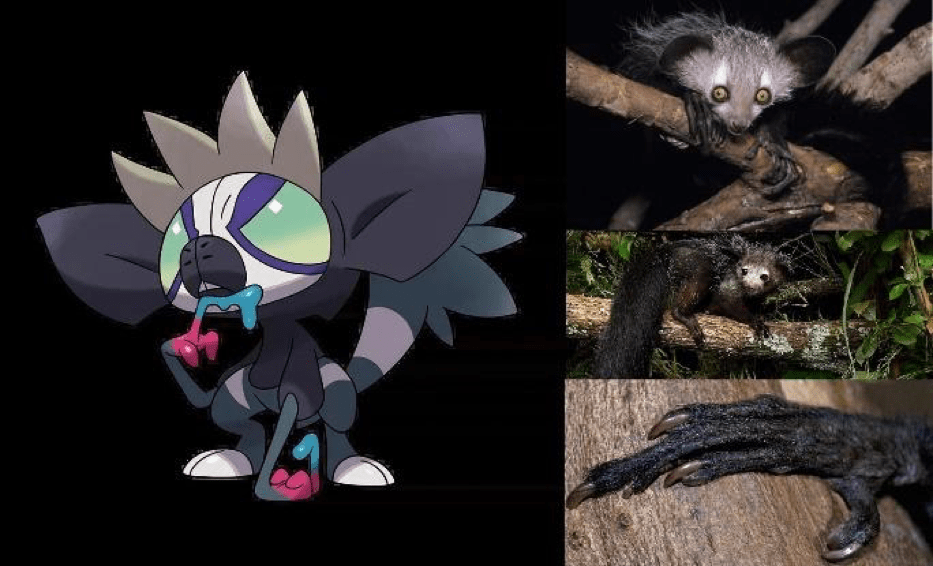
If you go through the entries, you will find these little nuggets of conservation dotted around the thousands of Pokémon descriptions. Muk, the toxic sludge Pokémon, is endangered in some regions due to cleaner cities in later games. Some people have even opened sanctuaries for them to thrive in. Lapras, one of the original 150 Pokémon, was said to be endangered in it’s first entries, but has since made a recovery so large that its overpopulation may be depleting local wildlife populations as they hunt. Even when the entry isn’t related to conservation, Game freak chooses to use real world animals that do need more attention from the public. Grafaiai is a Pokémon introduced in 2022 and is based on the Aye-aye, an endangered lemur species found in the forests of Madagascar. When it was released, many influencers started posting about what this strange creature was related to, causing an influx of people to investigate this strange looking animal. So, the largest franchise on the planet, in terms of revenue generated, seems to have a few soft spots for shouting out ecological issues. (Grafaiai (left), images of Aye-aye (right))
Pokémon has been slipping in these messages for years but is it just a subtle wink at the audience or a way of sneaking in education to those who want to pick up one of their games? In truth, we may never know, since much of the inner workings of Game Freak are kept tight lipped. What we do know is that with Pokémon’s wide reach across the planet, it is worth thinking about using the games to teach conservation to both children and older fans of the franchise. Baba Dioum’s famous quote, “In the end we will conserve only what we love; we will love only what we understand; and we will understand only what we are taught.” is a perfect quote for the work that can be done using this franchise. By using what we love to connect to the world around us we can teach about the natural world, promote understanding of where these monsters come from, and push for a dedicated movement to increase conservation to protect the real creatures that make this world so worth living in. Pokémon may be a business first, but somehow it may also be in the perfect position to help heal the planet.
Author Bio: Lucas is an animal educator and an Interpreter under the National Association of Interpretation. His work revolves around presenting scientific presentations with a pop culture background. He is part of the Sprites of Life podcast, where he and his friends Chris and Don discuss the various games they like and what people can learn from them.
Lucas’ Sprites of Life podcast can be found here:
Twitter: https://twitter.com/spritesoflife
Discord: https://discord.gg/wAAJrw9PGJ
Youtube: https://tinyurl.com/2hd6nfvk
Facebook: https://tinyurl.com/mr38ucbu
 MultiPlay